Package Homes vs. Kit Homes: What's the Difference?
Two manufacturers can call the same type of product a "kit home." A third can use "package home" for something built almost entirely off-site. Neither term carries a fixed meaning across the industry, leaving buyers guessing when they need an answer.
A buyer reading either term is no closer to knowing what they'd receive. What separates one product from another has little to do with the label. Some homes ship as components for on-site assembly. Others arrive at the lot substantially constructed.
Are Package Homes and Kit Homes the Same Thing?
Reference sources often treat the two terms as functionally identical. Century 21's glossary defines a kit home as prefabricated components assembled on site. It distinguishes a kit home from a modular home by how much assembly happens before delivery.
Quicken Loans notes that kit homes are not subject to federal regulation by the Department of Housing and Urban Development and that the contents of the packages vary by manufacturer. Some kits may omit major components, such as the foundation, so a lower price doesn't always indicate a lower total project cost.
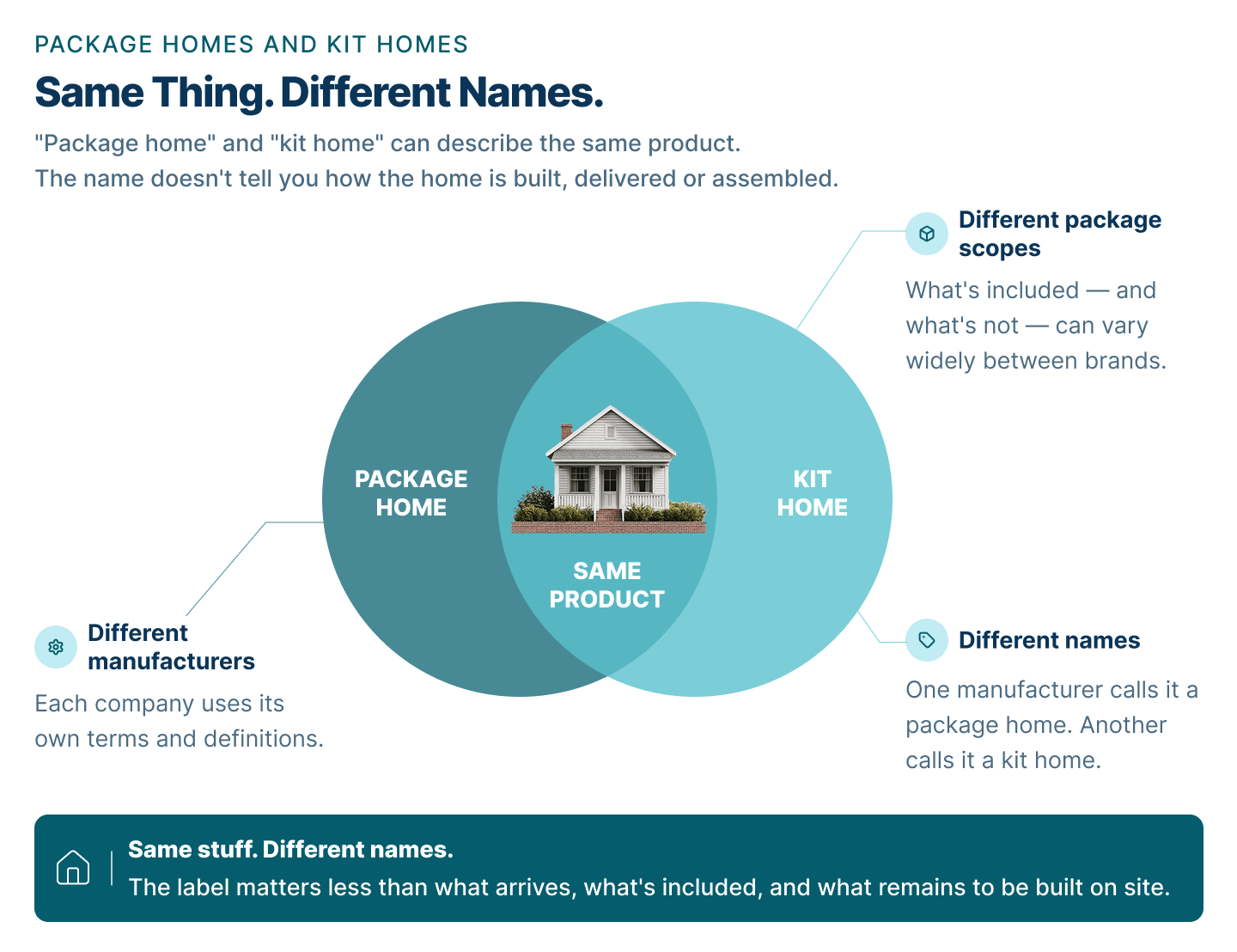
Here's the elephant in the room
“Kit home” tells you how a home is sold. It doesn't tell you what you're getting.
That's the problem with comparing package homes by name alone. The word “kit” can describe very different products. One manufacturer may ship structural panels for on-site assembly. Another may provide a more complete package. A third may use “package home” for a home that arrives substantially constructed.
The same applies to what is left out. A kit price may not include the foundation, site preparation, utilities, labor, permits, or other work required to turn the package into a finished home. That doesn't make the kit a bad value. It means the package price isn't the same thing as the total project cost.
There is another important distinction. A kit home is not the same thing as a manufactured home simply because both are built in a factory. Manufactured homes are constructed under HUD's federal Manufactured Home Construction and Safety Standards. A SIP kit home is a different construction model: its components are manufactured off-site, then assembled on the building site under the building codes that apply to the finished structure.
So the useful question isn't “Is this a kit home?” It's “What exactly does this manufacturer provide, and what remains to be done on site?”
Why Prefab Home Terms Vary by Manufacturer
Neither "package home" nor "kit home" has a single industry-wide definition. Manufacturers can apply either term to products with different levels of prefabrication, which produces the inconsistency buyers encounter.
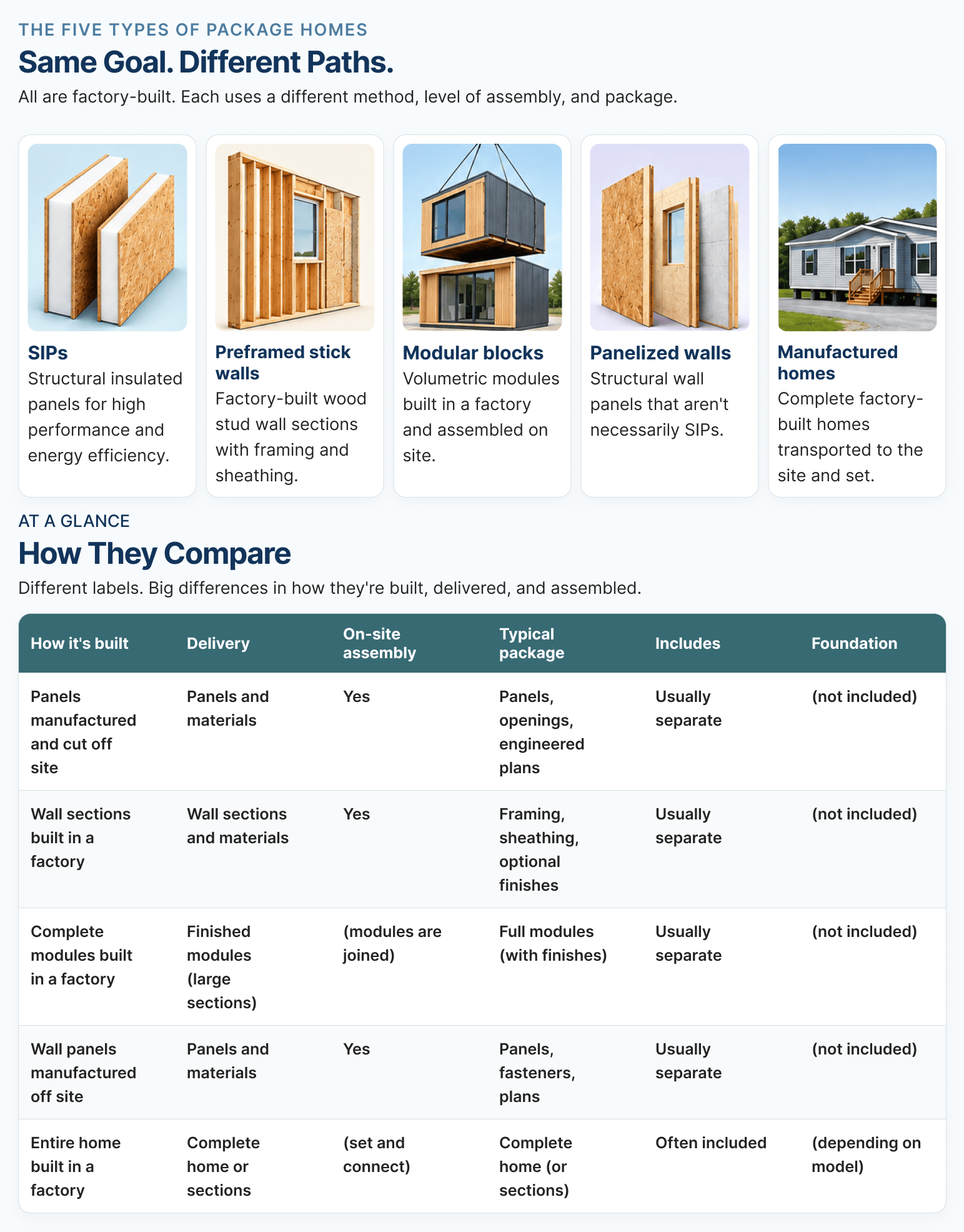
How Different Home Kit Products Are Sold
At the time of review, five representative manufacturers and reference pages appearing for related queries showed how differently the two terms can be applied.
- Century 21's glossary defines a kit home as components a contractor assembles on site, distinguished from a modular home by the amount of off-site assembly.
- Landmark Home and Land Company markets what it calls a "panelized home kit package," using "kit" and "package" interchangeably for the same flat-shipped, contractor-assembled product.
- Nelson Homes offers "Prefabricated Kit Packages" to U.S. buyers, covering panelized walls, trusses, and windows, shipped for on-site assembly, while reserving the term "ready to move" for homes that arrive complete.
- Kit Culture's comparison guide treats "prefab" as the umbrella term, then separates kit homes from modular homes by how much assembly happens off-site.
- Swanbuild, an Australian modular builder, uses "package home" to describe a specific, partially finished delivery stage, a narrower and different meaning than most U.S. manufacturers apply to the term.
Across these five examples, the label varies by company and market. The underlying question stays constant: How much of the home ships assembled, and how much is left for the buyer to complete?
Panelized Homes vs. Modular Homes
The distinction that decides what a project involves is whether the structure ships as components for on-site assembly or arrives substantially constructed. This is the line that separates panelized homes and modular homes, regardless of which term a manufacturer uses.
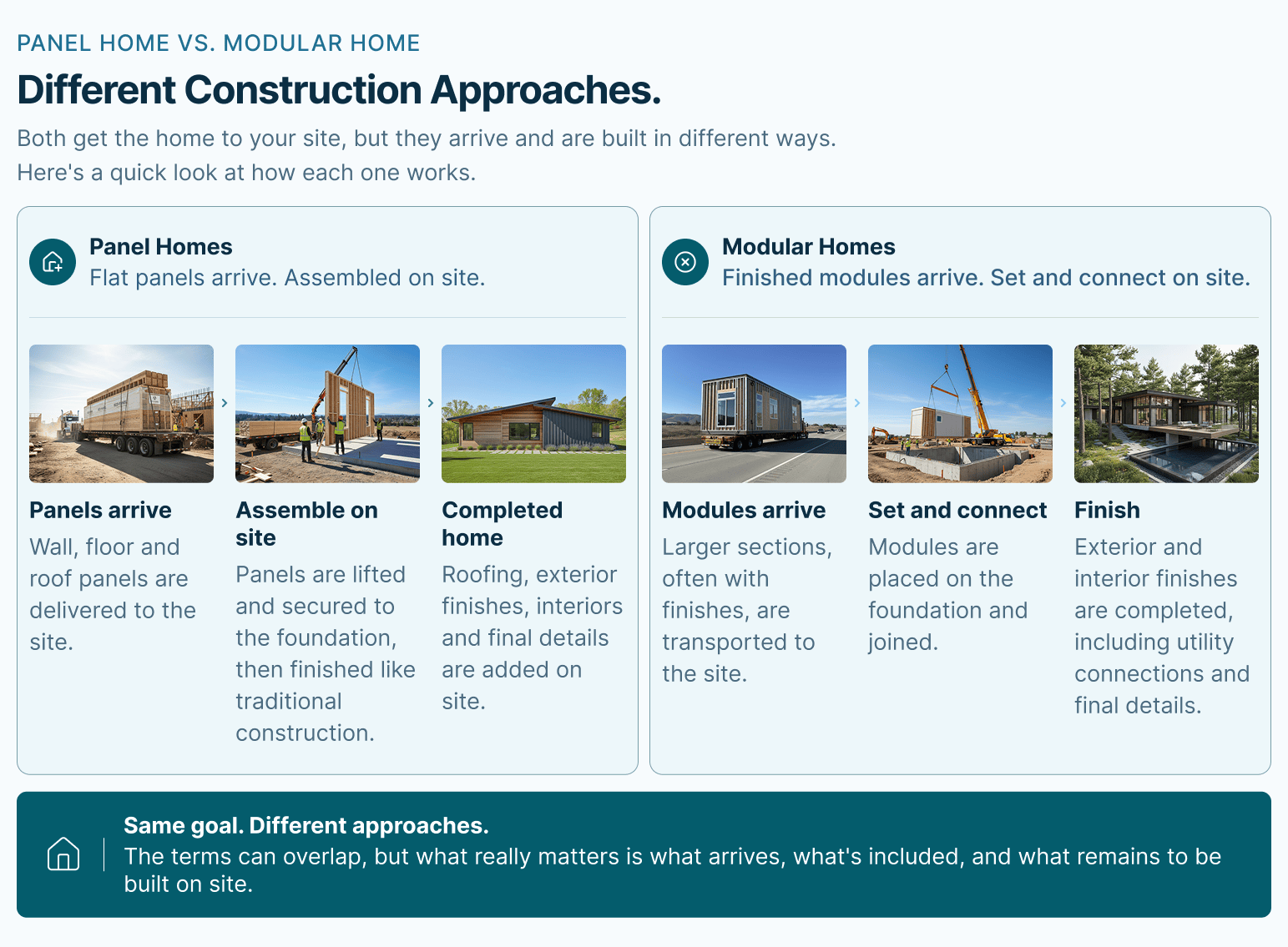
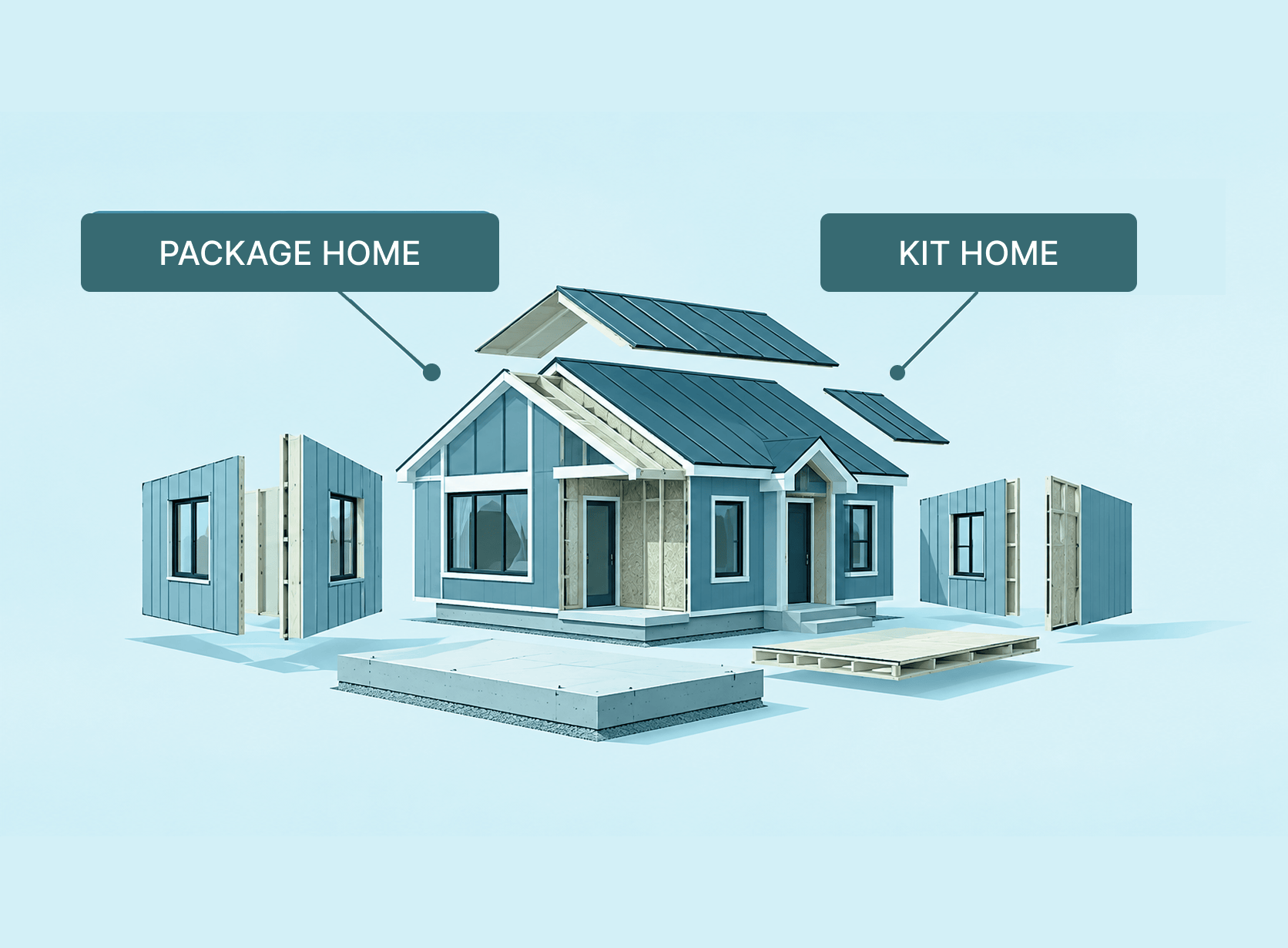
A component kit ships flat or panelized. Structural insulated panels, known as SIPs, are manufactured off-site to specified dimensions, then delivered for a crew, contractor, or buyer to assemble.
A pre-built or modular home involves far more off-site work. The National Association of Home Builders describes modular construction as taking place almost entirely in a factory, with wiring, plumbing, and interior fixtures installed before a crane sets the finished modules on a permanent foundation. Both are legitimate ways to assemble a home. They ask different things about the site, schedule, and budget.
What Kit Home Assembly Looks Like
| Component Kit | Pre-Built Modular Delivery | |
| Shipment form | Flat or panelized components | Finished or near-finished modules |
| On-site assembly | Full assembly by the buyer, contractor, or crew | Modules are set and connected |
| Typical site prep | Foundation ready to receive panels | Foundation plus crane access for module placement |
| Typical transport | Standard flatbed delivery | Specialized, oversize-load transport |
That difference between the two columns affects the budget and calendar. A manufacturer's own FAQ page can confirm the difference between panelized home kits and modular homes. That information is worth checking directly rather than making assumptions based on a product name or rendering.
What On-Site Assembly Involves
For a component kit, "on-site assembly" covers specific work.
- Setting and securing wall and roof panels on a prepared foundation
- Sealing and taping panel joints to close the building envelope
- Installing house wrap and roofing underlayment
- Finishing interior surfaces, wiring, and plumbing once the shell is closed in
The work requires a crew, a timeline, and a plan for who does what. A separate guide to assembling a kit provides a closer look at each step with photos.
What the Building Method Decides
The method a manufacturer uses determines site preparation, transport logistics, and labor needs well before construction starts.
A buyer who assumes a "package home" will arrive ready for move-in may learn after contacting the manufacturer that the product is a component kit requiring full on-site assembly. That changes the labor plan, schedule, and budget before ground is broken. The product may match the manufacturer’s description, but the label alone did not provide enough information for the buyer to plan around.
That kind of mismatch is avoidable.
Site preparation differs between a panelized shipment and a large pre-assembled module. One needs a finished foundation. The other typically needs crane access as well, since the Modular Building Institute describes cranes placing modules directly onto a completed foundation on delivery day. Transport logistics also vary with the extent to which the home is assembled before shipment, which is why shipment and delivery planning depend on the model selected.
Building permits and code requirements apply to the finished structure either way. The National Association of Home Builders notes that modular homes must meet applicable state and local building codes. A component kit must also meet the codes that apply once assembled. Code officials evaluate the engineering and finished structure, not the label used to market it.
How SIP Panel Homes Fit Into the Kit Home Category
SIP panel homes are one type of kit home. The panels are manufactured off-site, then shipped to the building site for assembly. The panels form the structural walls, roof, and other components of the home's shell, while site work and final construction happen on site.
That makes a SIP kit different from a modular home, where completed sections of the home are constructed in a factory and delivered to the site. It also differs from a manufactured home, which is built to HUD's federal construction standards and transported to the site as a completed dwelling or sections of one.
For buyers, the important question is what the manufacturer supplies and what remains to be completed on site. That can include the foundation, site preparation, utilities, interior finishes, labor, permits, and other project requirements. The kit price alone does not define the scope or total cost of the build.
A more detailed checklist of what to look for when buying a house kit covers these questions for any manufacturer under consideration, including MSH.
How MSH's SIP Kit Homes Fit In
Mighty Small Homes (MSH) manufactures and ships SIP panel kit homes as components. The buyer, contractor, or hired crew completes the assembly on-site. MSH does not build, erect, or install the home.
MSH documents structural performance at the panel and system level, giving buyers specifications to review. Structural performance documentation for SIP kits typically covers:
- Wind rating
- R-value
- Fire resistance rating
Buyers can contact MSH directly with questions about kit contents, assembly responsibilities, and available documentation before comparing prices.
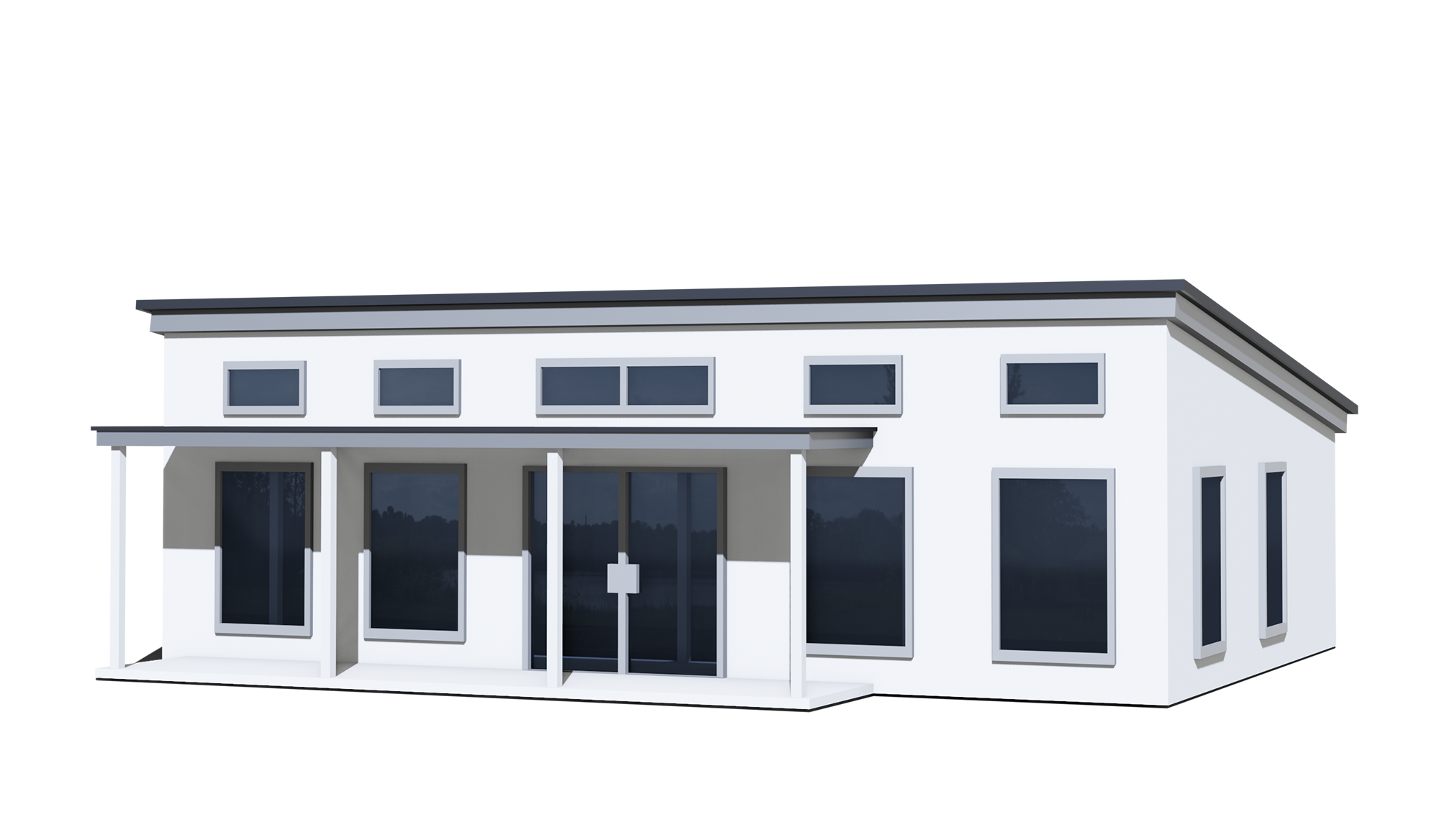
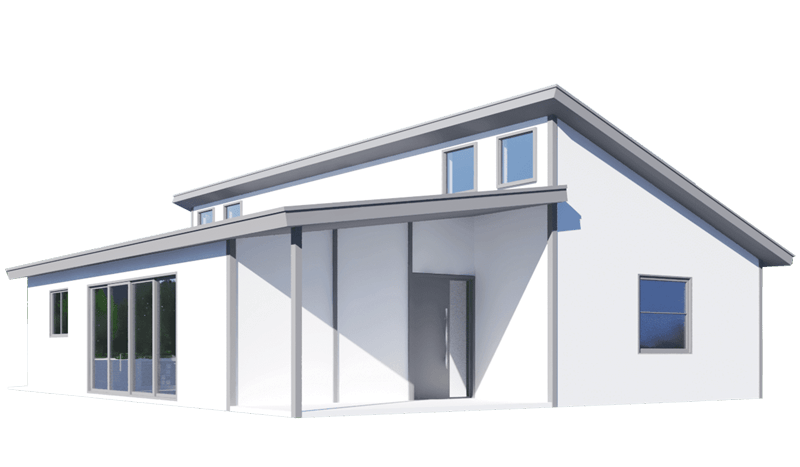
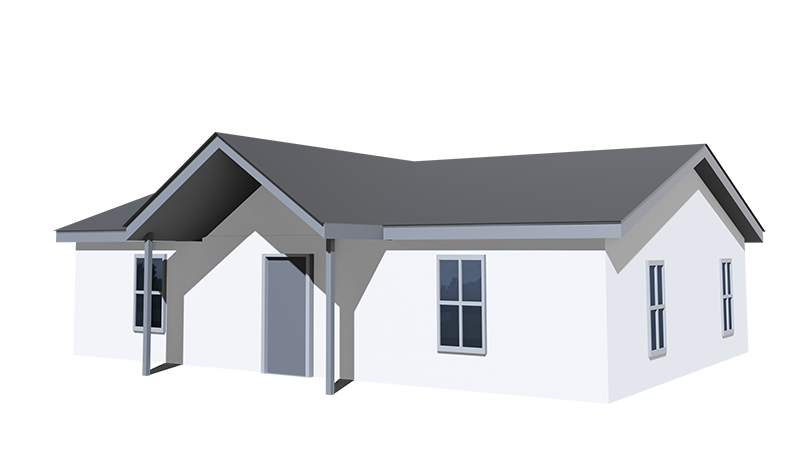
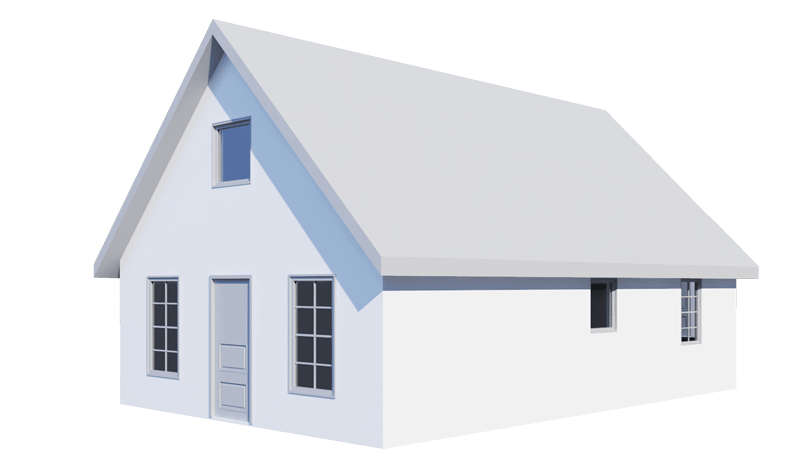
One home ships flat and is assembled on the buyer's lot. The other arrives largely finished. MSH's SIP kit homes fall into the first category, with models available to compare against a given lot and plan.