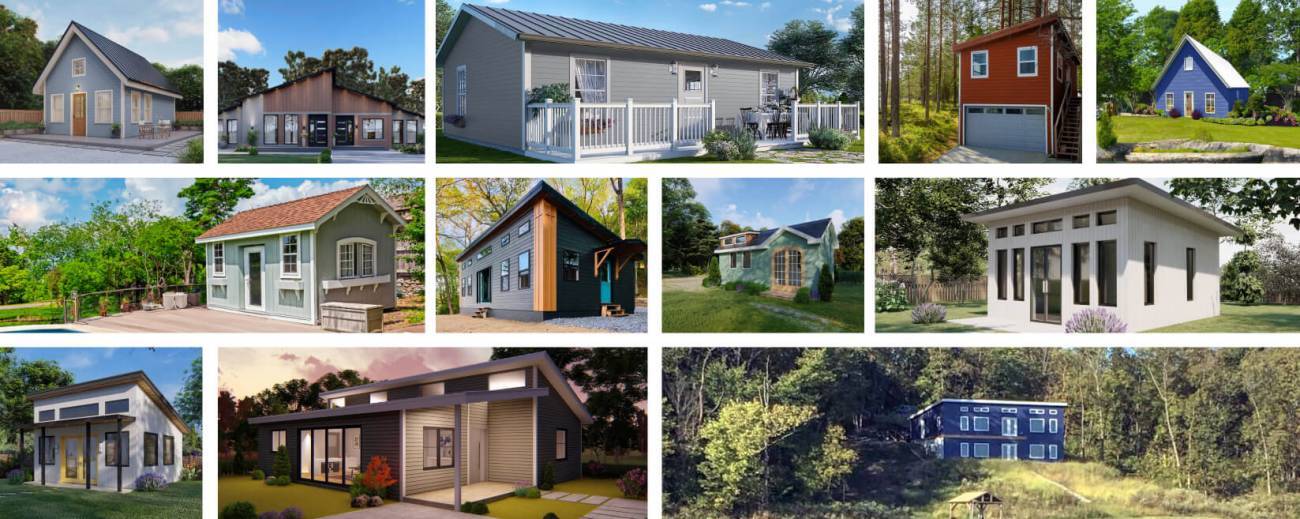
Great Ways To Use Small House Kits
Small house kits are not built for one single outcome. A backyard ADU, a remote cabin, a rental unit, and a first home each place different demands on the design.
That difference matters.
The wrong kit can leave you short on storage, privacy, comfort, or long-term value, even if the square footage looks right on paper.
Mighty Small Homes uses Structural Insulated Panels (SIPs), not conventional stick-framed kit construction. SIPs give each home a stronger, tighter, more energy-efficient shell, which matters when the building needs to perform as a full-time home, guest space, rental, or retreat.
This guide helps you match your life scenario to the right small house kit, understand why the building system matters, and choose the next step with more confidence.
Guided link: Compare Small House Kit Models
What Makes Small House Kits a Smart Modern Solution
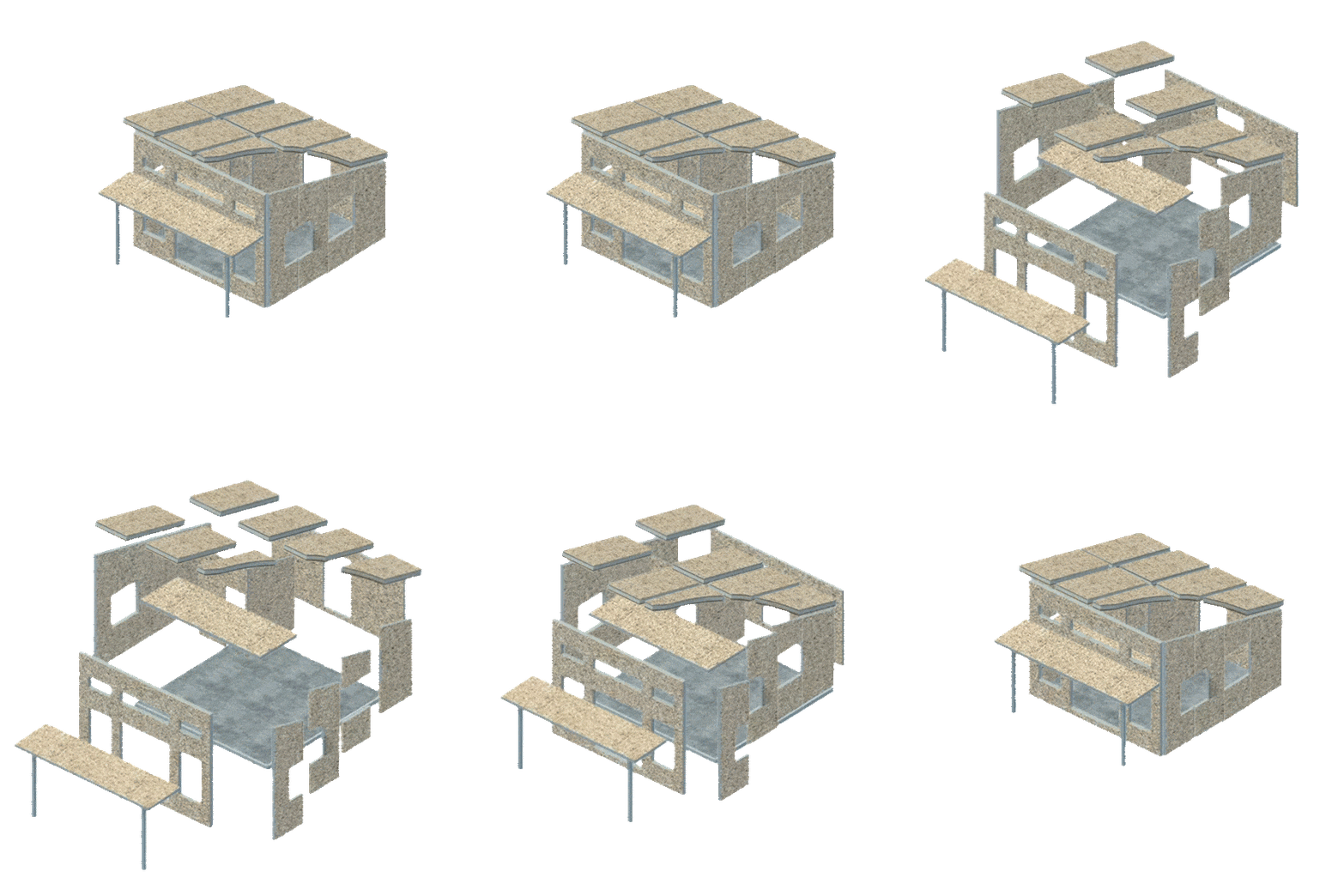
A small house kit gives you a defined structure before construction begins. Instead of starting with loose framing materials and a long list of site-built variables, buyers begin with a proven kit, a clearer model choice, and a building system designed for faster assembly.
Mighty Small Homes’ prefab small home kits are built with SIPs.
These factory-made wall and roof panels help improve consistency, reduce some of the delays that can come with traditional framing, and create a tighter building envelope.
This helps improve energy efficiency, comfort, and build stability from model selection through assembly.
Prefab ADU Kits: Add a Backyard Unit for Rental or Family Use
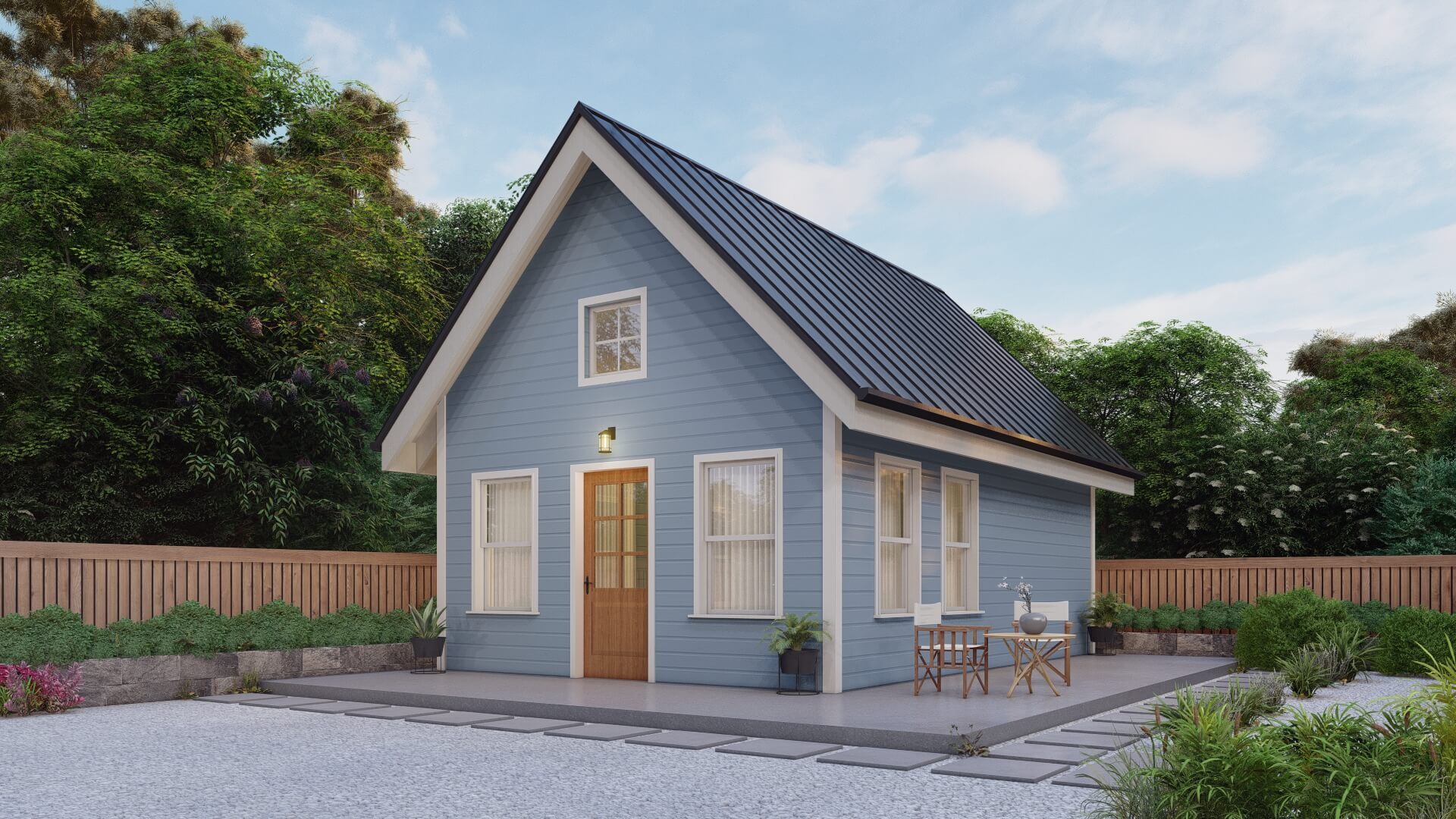
An unused backyard has the potential to become more than extra grass to mow. For many homeowners, it can support a private living space for family, guests, or long-term rental use.
A good Accessory Dwelling Unit (ADU) should feel separate without feeling disconnected. It needs privacy, a clear entrance, a compact footprint, and an efficient layout that does not waste space. Local rules may also limit size, height, setbacks, parking, and rental use, so the right model starts with the site as much as the floor plan.
Because construction happens close to the main home, reducing prolonged site disruption matters too.
SIPs work here because operating costs affect the long-term value of the unit. If the ADU is used as a rental, lower heating and cooling demand helps protect margins. If it is used for family, a tight insulated shell keeps the space more comfortable without constant system use.
- The Carriage is a practical fit when an ADU needs storage or garage integration. It gives room for bikes, tools, bins, garden equipment, or tenant storage without crowding the living area.
- The Cottage works well when the ADU needs to feel like a comfortable backyard residence. Its pitched roof, porch options, and traditional shape help it sit naturally behind older homes or suburban properties.
- The Tiny is the right starting point when the site is tight, or the planned use is focused. It suits compact living, a backyard office, or a small studio-style space.
Prefab Vacation Home Kits for Lakes, Woods, and Remote Land
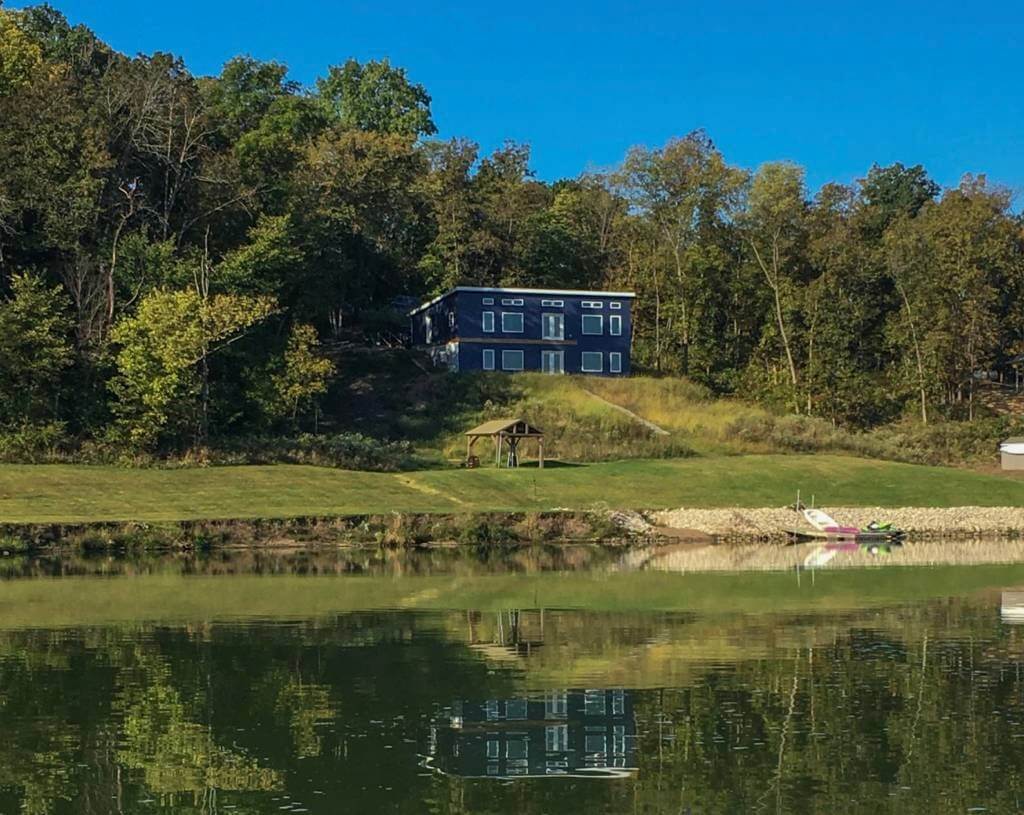
A vacation home should be ready when you arrive. The ideal Friday night is unpacking, turning on the lights, and settling in – not checking for drafts, leaks, or repairs.
Remote and seasonal properties need durable construction, strong insulation, and a design that suits the land. A wooded lot may need a smaller layout and a practical roofline that suits the setting. A lake or mountain site may need more glass, more open interior space, and a layout that points toward the view.
SIPs help in this setting because the insulated shell can hold comfort more steadily between seasons. For homes that sit empty between visits or face cold nights, wind, or changing weather, that performance matters.
- The A-Frame is a strong choice for scenic locations. Its steep roofline, open interior, and architectural shape work well on lake, mountain, or wooded sites where the home should feel connected to the landscape.
- The Cottage suits buyers who want a quieter retreat with a familiar residential feel. Its traditional lines and warm profile work well on family land, wooded lots, and rural settings where the home should feel settled rather than showy.
Small House Kits for First-Time Homebuyers Seeking Simplicity
First-time buyers often need a home that feels achievable from the start. The goal is not to buy the cheapest structure possible, but to avoid paying for space, complexity, and ongoing costs.
This buyer needs cost predictability, a manageable footprint, clear room flow, and enough storage for daily routines. Cooking, laundry, work, rest, and guests still matter in a smaller home. The layout must support everyday living, not just look efficient on a plan.
SIPs support this because long-term utility costs matter after move-in. A better-insulated shell can reduce the pressure of heating and cooling bills, while the kit format gives the project a more controlled starting point than a fully custom build.
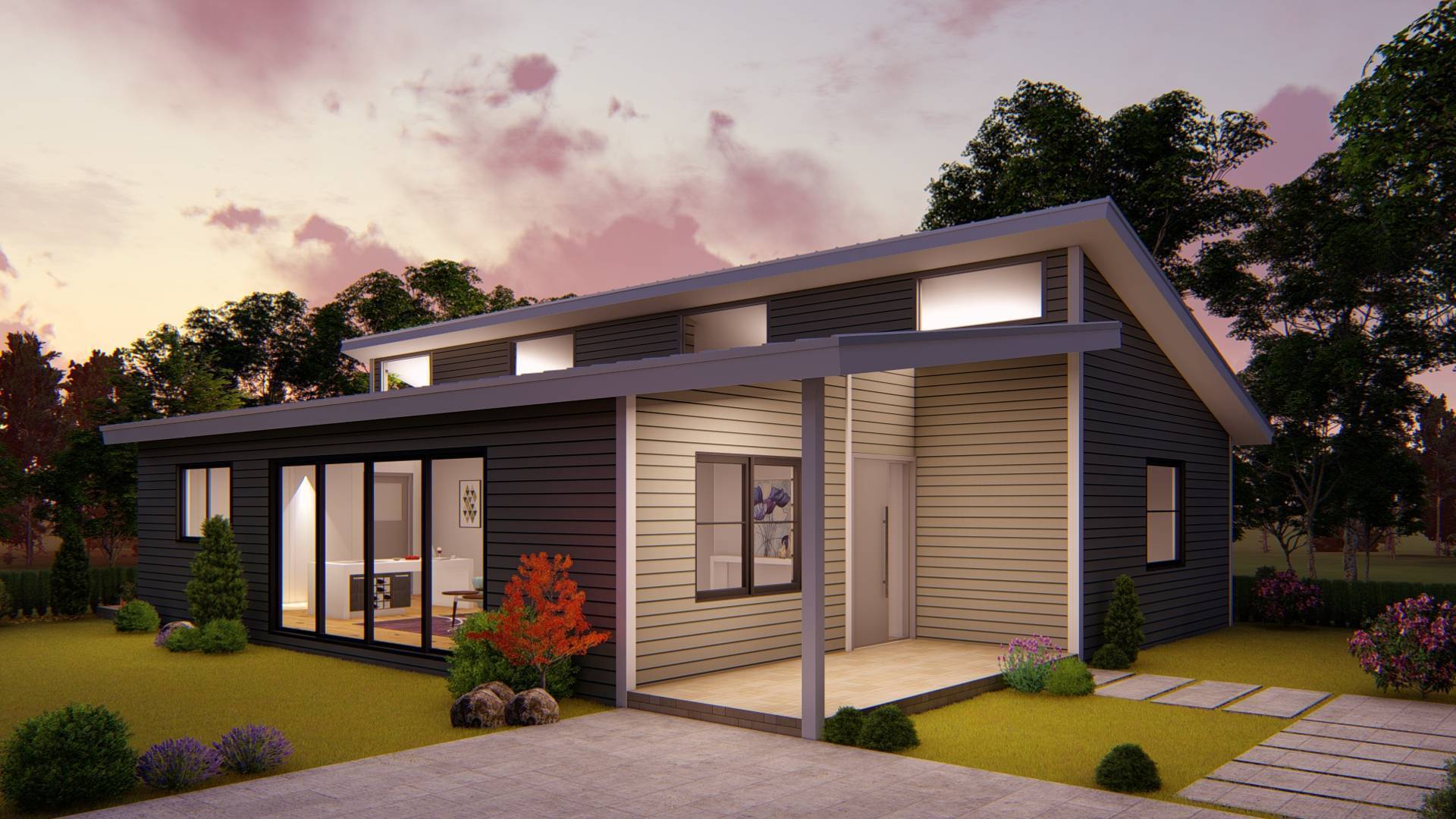
- The Contemporary gives first-time buyers a clean, manageable layout that supports full-time living without pushing them into oversized square footage. Its open common areas and straightforward footprint help the home feel practical from day one.
- The Ranch is a strong fit for buyers who want simple, single-level living. Its traditional profile feels familiar, and its straightforward room flow makes the home easy to navigate.
In-Law Suite Kits for Multigenerational Living
An in-law suite needs privacy without distance. The person living there should have their own space and routine, while having easy access to family when needed.
For this to work well, the space needs comfort, quiet, accessibility, and a layout that can support long-term living. Single-level options may matter. Wider entries, open common areas, fewer tight turns, and a bathroom that is easy to reach can make a smaller home easier to live in over time.
For this kind of project, the insulated shell does more than improve comfort. It helps reduce drafts and temperature swings, which matters for older family members or anyone spending much of the day at home.
- The Modern works when light, openness, and a layout that feels airy without wasting space are priorities. Its clean rooflines and larger windows can make a compact home feel less closed in.
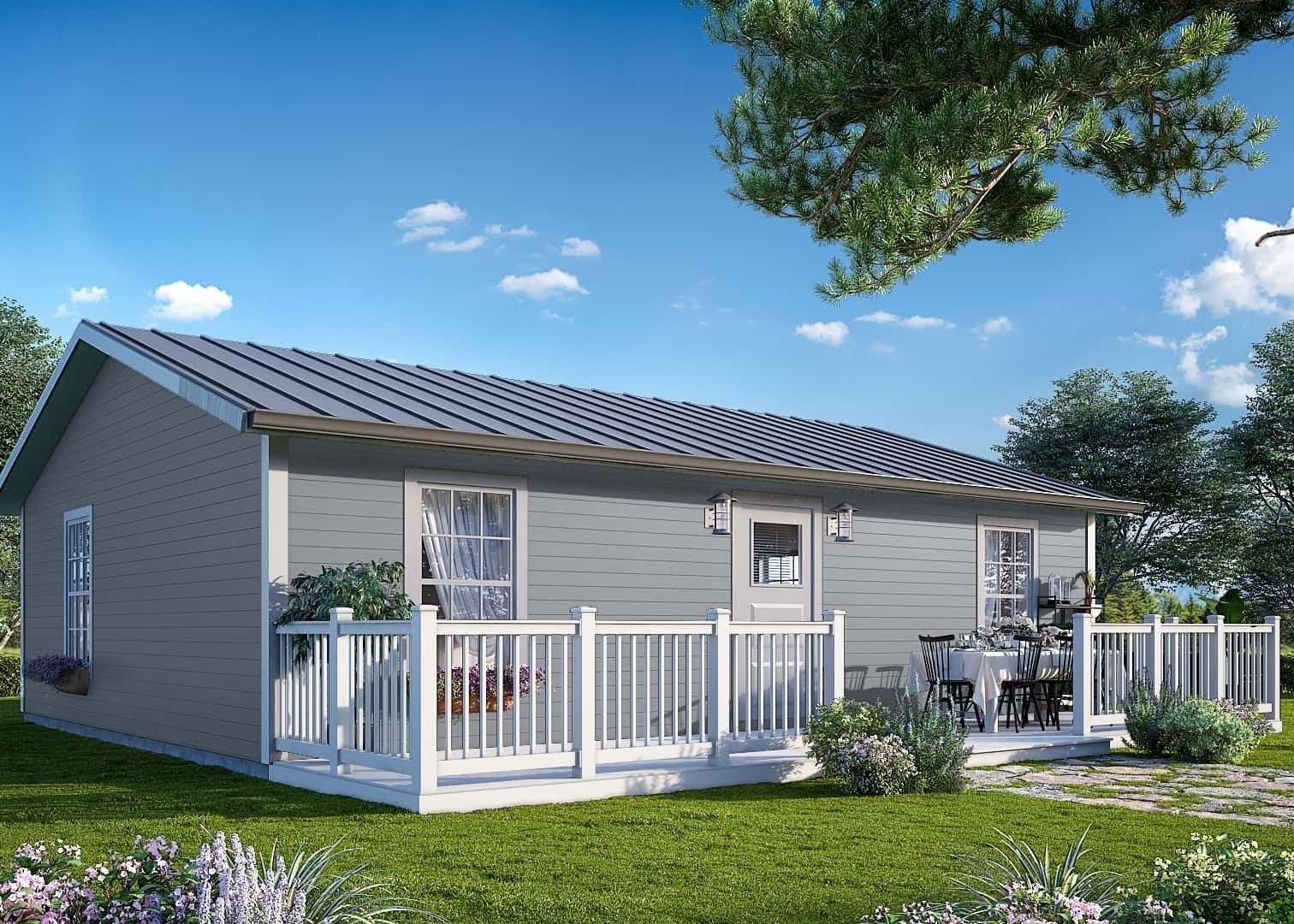
- The Cottage gives an in-law suite a warmer, more residential feel. Its pitched roof and familiar shape help the space feel like a proper home, not an add-on.
- The Duplex can work when the family needs two separate living spaces in one structure. It gives more privacy than a shared home and may offer flexibility if family needs change later.
Rental Property & Airbnb Small House Kits for Income Generation
A rental unit must withstand regular use. Guests and tenants need a space that feels clean, simple, and easy to use. Owners need a structure that can handle turnover, weather, and daily wear without becoming difficult to maintain.
For this buyer, the priorities are return on investment (ROI), durability, operating cost, and tenant appeal. The layout should be easy to clean, easy to photograph, and simple for people to navigate. Awkward corners, poor storage, and cramped circulation can quickly reduce the value of the space.
SIPs help because energy use affects operating margin. Lower heating and cooling demand helps reduce ongoing costs, while panelized construction delivers more consistent quality across a single unit or several.
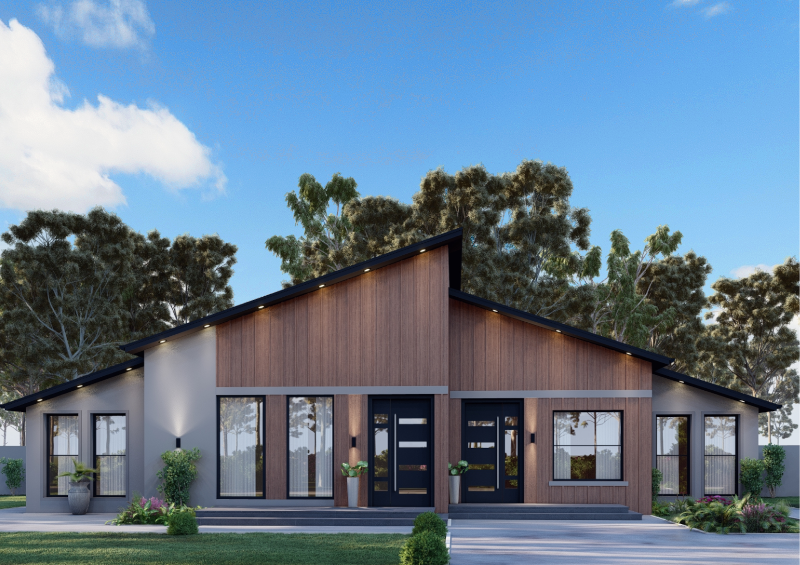
- The Duplex is a strong option for long-term rental planning, owner-occupancy, or paired living. It provides buyers with two units in a single structure and allows for different ownership or rental strategies.
- The Fourplex is better suited to investors or developers planning multiple residences on one site. It helps scale income potential across several units without treating each structure as a separate one-off build.
- The Modern, Cottage, and A-Frame can also work for short-term stays, depending on the setting. The Modern gives a clean, current look. The Cottage feels warm and familiar. The A-Frame adds stronger visual appeal for scenic or retreat-style rentals.
Home Office, Wellness, Hobby, Workshop, and Studio Kits for Focused Workspaces
A detached workspace should create a clear break from the main house. The value comes from having a door that closes, a room that stays set up, and a place where activity in the main house does not keep interrupting the work.
Remote professionals, creators, trainers, therapists, and hobbyists all need something slightly different. Some need a quiet workspace with a steady temperature. Others need natural light, storage, open floor space, or room for tools and equipment.
A workspace only earns its place if it stays comfortable enough to use regularly. A room that is too hot, too cold, or too noisy quickly turns into storage. A well-insulated shell keeps the space easier to use in early mornings, late evenings, and changing weather.
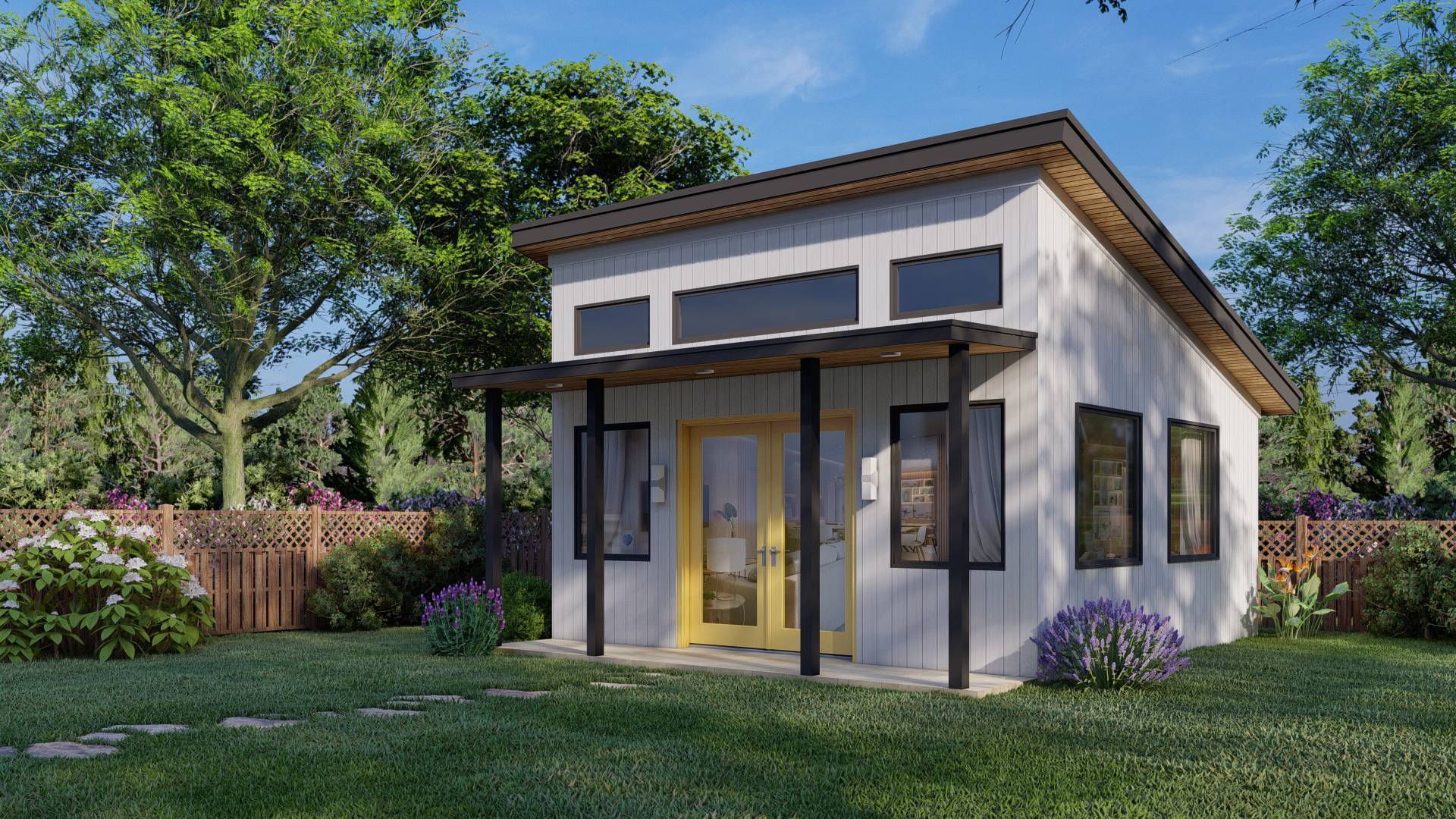
- The Modern is useful for offices, studios, and wellness spaces. Its clean layout, large windows, and open interior give the room an uncluttered feel.
- The Carriage works when the use includes equipment or storage. The garage level holds tools, bikes, supplies, gym equipment, or workshop materials, while the upper space can be planned for work or creative use.
- The Tiny is a minimal solution for a compact office, writing room, therapy space, or backyard studio where separation carries more value than full-time living space.
Hunting Cabin and Off-Grid Retreat Kits Built for Durability
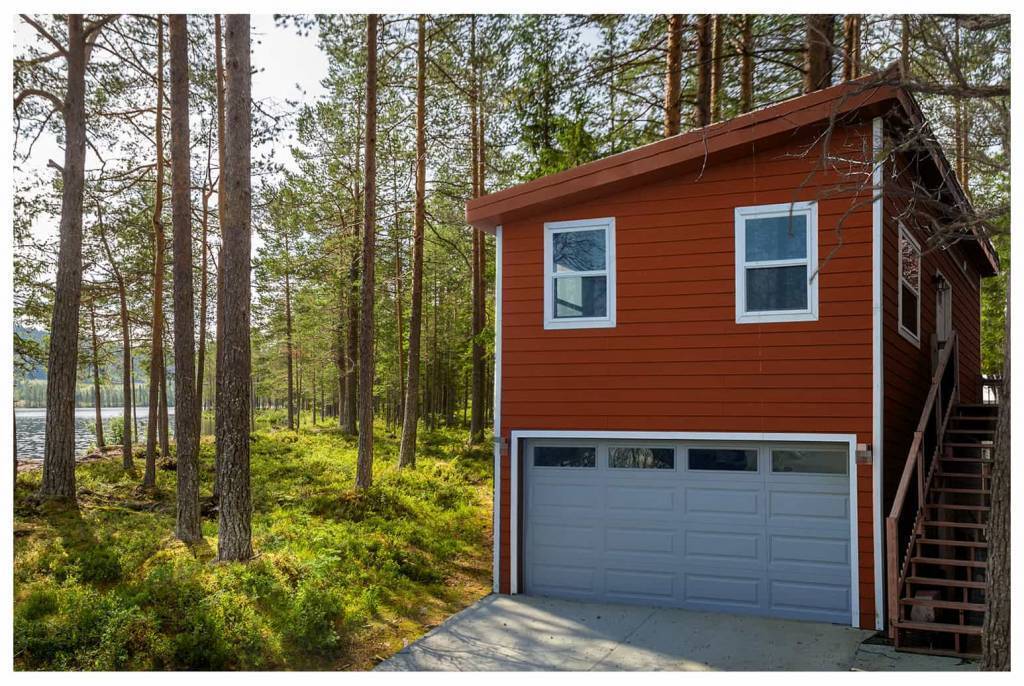
A hunting cabin or off-grid retreat takes rougher use than a guest house. Mud, gear, cold mornings, long gaps between visits, and rough access roads all affect what the building needs to handle.
This type of property needs structural integrity, insulation, practical storage, and simple maintenance. A remote cabin should be easy to secure, easy to heat, and durable enough for seasonal use without constant repair.
SIPs work well here because the structure and insulation work together. A tight thermal envelope keeps the cabin more comfortable in cold weather, while the panelized system creates a stronger, more controlled shell than a basic low-quality cabin kit.
- The A-Frame works well in rugged environments. Its steep roofline suits wooded, snowy, or mountain-style settings, and the open interior leaves room for bunks, gear, and gathering space.
- The Carriage is useful when storage is non-negotiable. The garage area holds hunting equipment, tools, coolers, outdoor clothing, a small boat, and recreational gear, keeping the living area cleaner and easier to use.
Lake House and Waterfront Small Home Kits Designed to Last
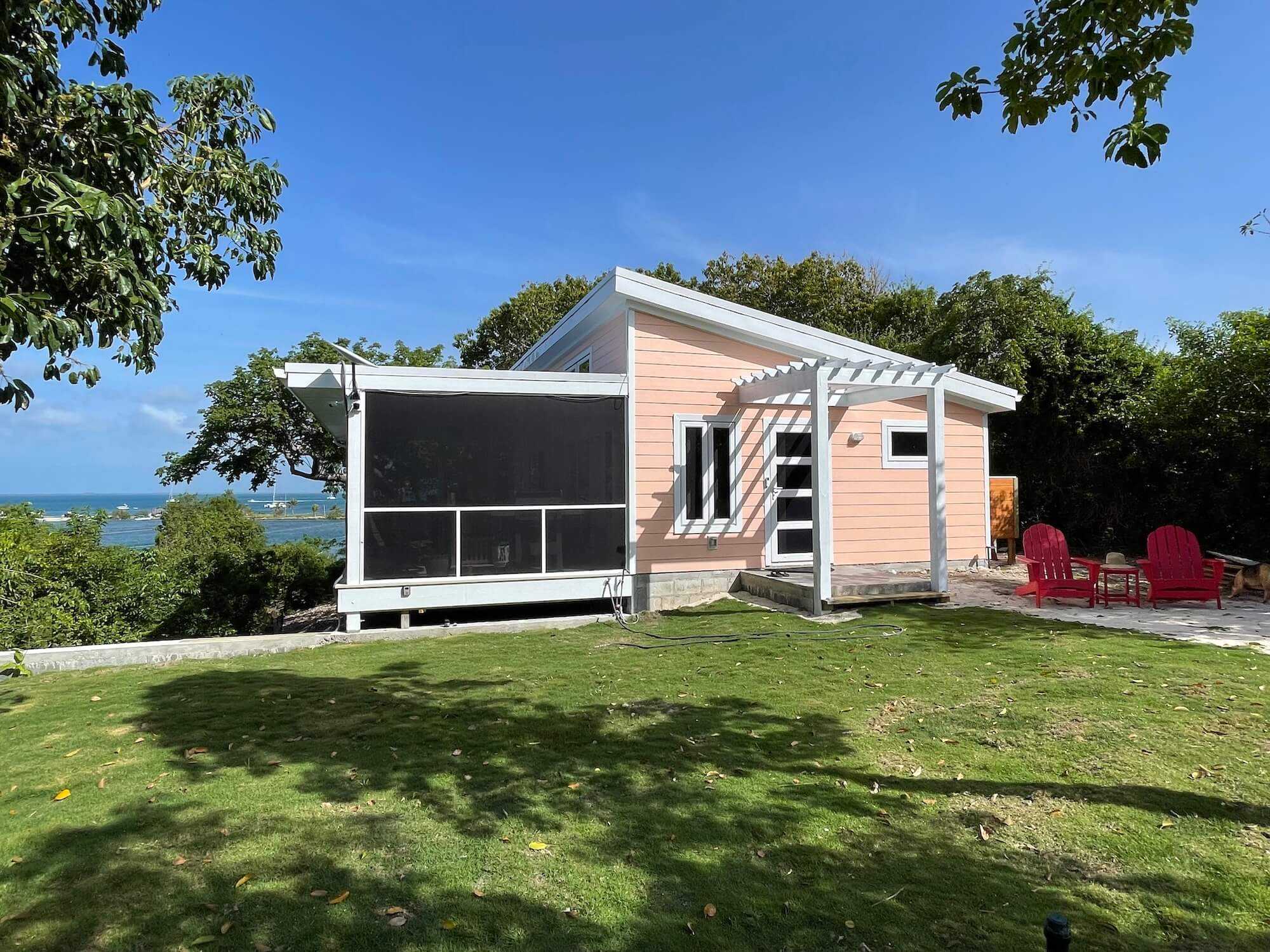
A waterfront home needs to handle moisture, wind, sun, and seasonal use. It also needs to make the view worth building for.
The best lake house layout places daily living where the water stays visible. Window placement, common areas, porch access, and storage for towels, chairs, and outdoor gear carry more value here than squeezing in extra rooms.
SIPs fit this setting because the home needs a durable, insulated structure that stays comfortable through damp mornings, hot afternoons, and cooler evenings near the water. For a property that may sit empty between visits, low upkeep also becomes more important.
- The A-Frame is a strong fit when the site has a clear view. Its shape gives the home architectural character, and the open interior works well when planned around the water-facing side.
- The Modern works well for buyers who want larger windows and a lighter visual footprint. It opens the home toward scenic views without making the structure feel too heavy for the property.
Pool House and Guest House Kits for Flexible Property Use
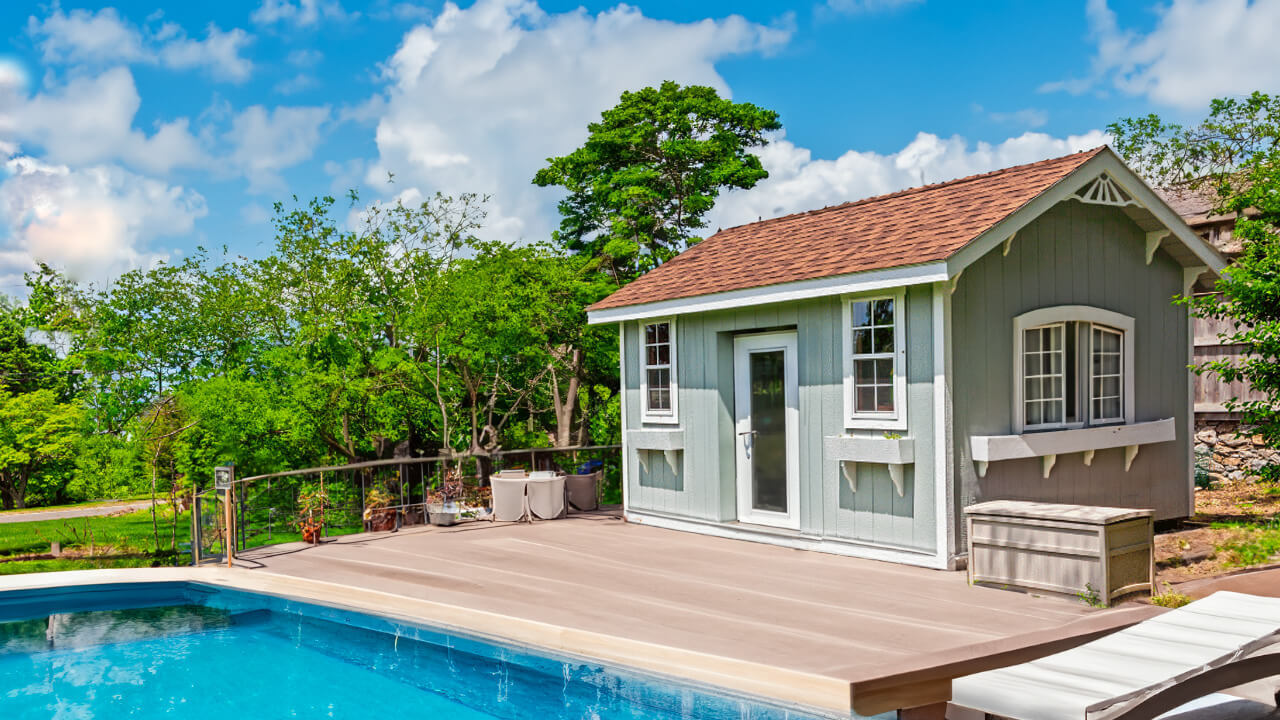
A pool house or guest house makes an existing property more useful. It holds towels and a changing space, gives guests privacy, or creates a shaded retreat close to the pool.
This usually needs a compact plan, bathroom access, storage, and one flexible main room. Too much square footage can crowd the yard. Too little planning can leave the structure underused.
SIPs help because the space should stay comfortable beyond the few hours around the pool. A better-insulated shell keeps the building easier to use during hot afternoons, cooler evenings, and longer guest stays.
- The Modern gives a pool house or guest house a clean, versatile look. Its simple roofline and open interior work well when the new structure should feel light and current.
- The Tiny is a better fit for limited space. It gives buyers a smaller version of that same clean, simple function without taking over the yard.
Pocket Neighborhood Small House Kits for Community-Scale Living
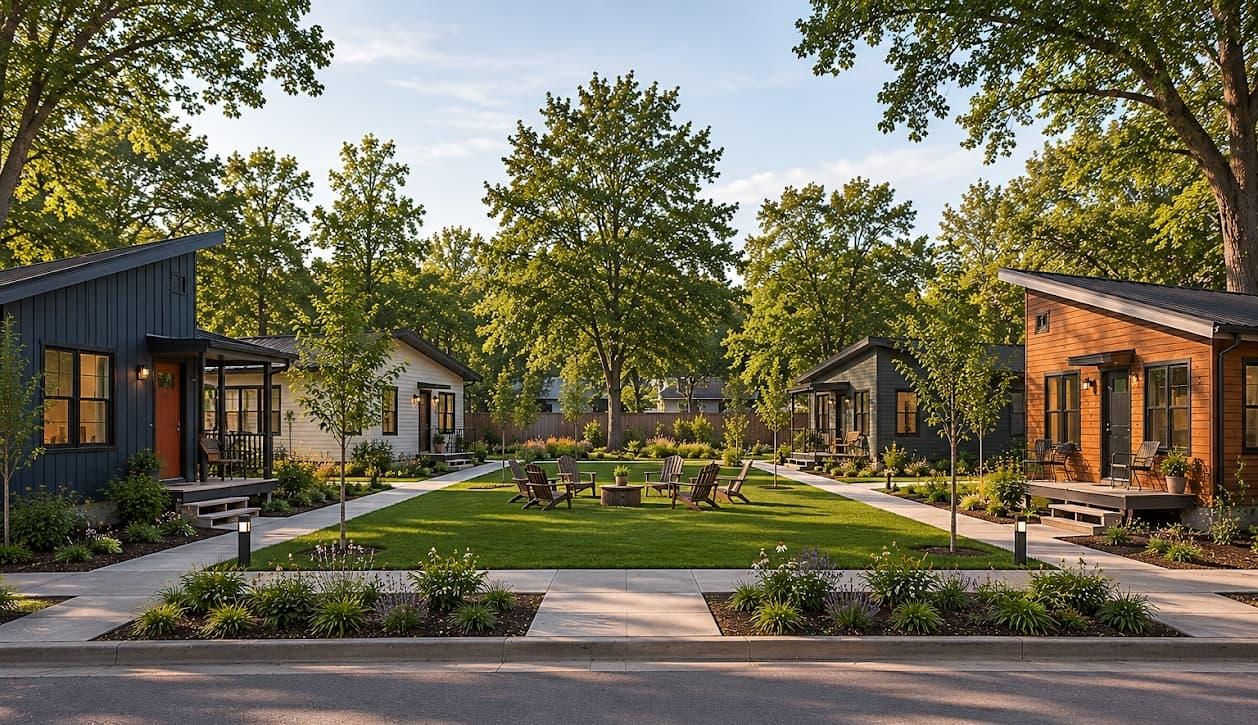
A pocket neighborhood is not just several small homes placed close together. It is a walkable cluster where rooflines, paths, parking, shared green space, and privacy need to work together across the site.
For developers, landowners, or municipalities, the priorities are design repeatability, speed, consistency, and efficient land use. A project may include 4 to 20 homes, often arranged around a courtyard, shared garden, or central green. The challenge is creating density without making the site feel crowded.
The strategic value comes from how these homes can be arranged and used. Efficient footprints allow for higher density without sacrificing livability, especially when homes share planned utilities, paths, parking, or green space.
The same site may also allow for different ownership models, including individual sales, long-term rentals, or mixed-use planning. For eco-conscious buyers or tenants, an energy-efficient building envelope becomes part of the community’s appeal rather than just a technical feature.
Pocket neighborhoods can work for a variety of community types. They may suit senior communities that need low-maintenance, single-level living, starter-home micro-subdivisions for first-time buyers, eco-focused clusters, developer-owned rental communities, or mixed-use rural developments where infrastructure needs careful planning.
Small house kits work well here because the same model can be repeated without turning every home into a separate custom project. Factory-made SIPs create more consistent quality across multiple units, while strong thermal performance helps reduce long-term operating costs for owners or tenants. Faster assembly also keeps projects moving where skilled labor is limited.
- The Duplex and Fourplex can be grouped as strong multi-unit options. They support shared walls, higher density, and rental or mixed-ownership planning, which makes them useful for investors, developers, and community-scale sites.
- The Cottage works well when the project needs a warmer, more residential feel. Its pitched roof and familiar lines soften the streetscape, especially in owner-occupied communities or senior pocket neighborhoods.
- The Modern suits contemporary pocket neighborhoods where clean rooflines, larger windows, and a consistent exterior palette define the site.
Design choices carry more weight at this scale. Homes can be clustered around a shared courtyard or green space. Walking paths, shared gardens, and small amenities help the neighborhood feel connected. Centralized parking helps preserve the pedestrian-friendly feel inside the site.
See For Yourself, Step Inside
Step inside real builds, from framing to finish, and see how customers shape layouts, styles, and living spaces. →
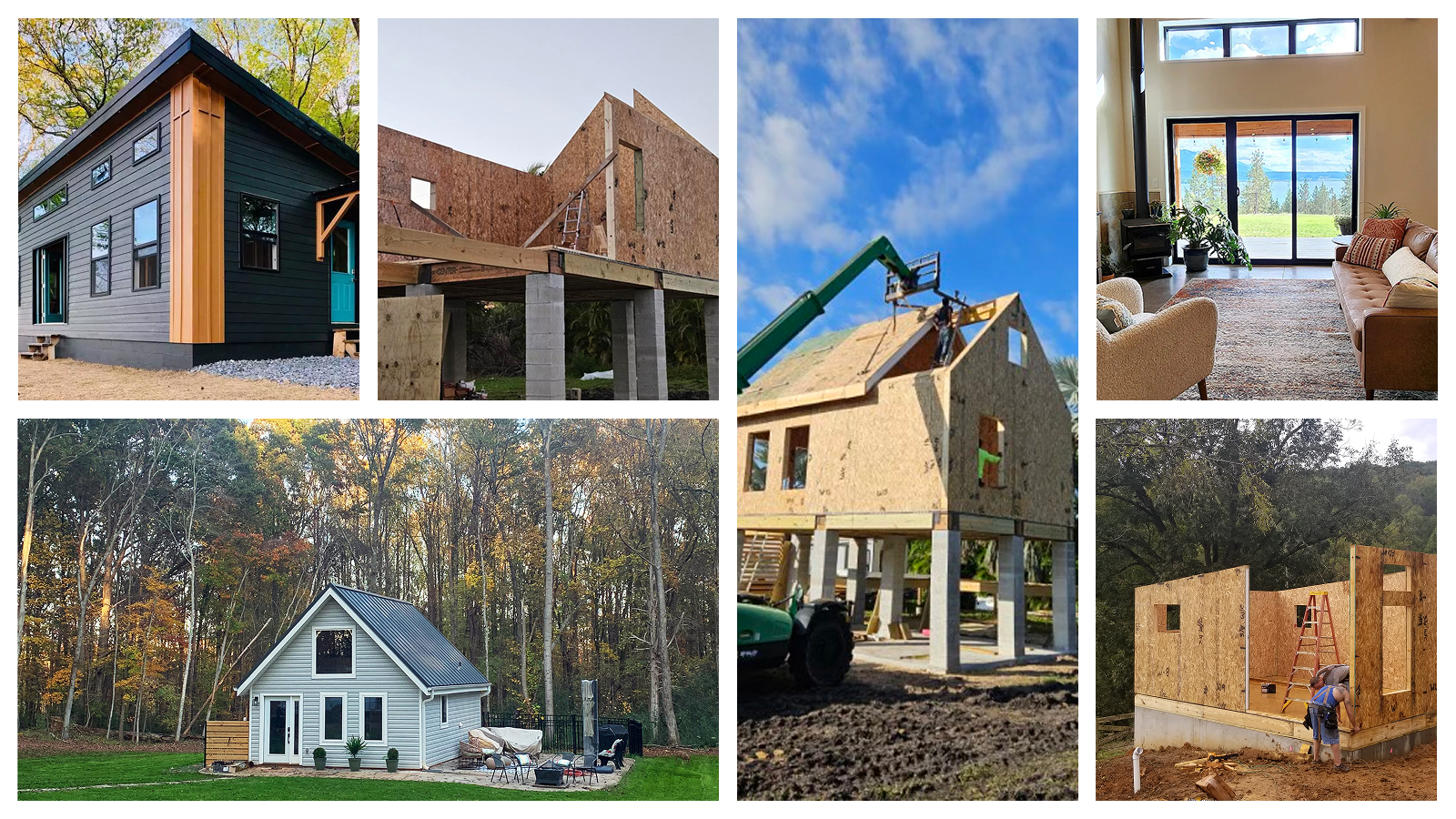
Why Not All Small House Kits Perform the Same
Two small house kits can look similar on paper and perform very differently once built. Square footage does not show air sealing, panel quality, insulation, structural strength, or how controlled the build process will feel during construction.
SIPs change how the walls and roof are built. Instead of framing everything piece by piece on site, the structure arrives as insulated panels designed for tighter assembly and more consistent performance. That difference affects comfort, energy use, durability, and build consistency.
Energy efficiency helps reduce long-term operating costs. Structural strength becomes more important in demanding conditions, from wooded cabins to waterfront homes. Factory precision creates a more predictable path from model selection to assembly.
Those advantages show up differently depending on the project. In a rental, the value may come from lower operating costs. In a cabin, it may become obvious during cold weather. In an in-law suite, it may create steadier indoor comfort. In a pocket neighborhood, it may help maintain predictable quality across multiple homes.
The better question is not which kit looks best, but which kit fits how the building will actually be used.
How to Choose the Right Small House Kit for Your Situation
Start with the primary use. Decide whether the home needs to handle full-time living, rental income, a family member, a retreat, a workspace, or a multi-unit plan.
Then evaluate the site constraints. Look at lot size, access, slope, utilities, privacy, views, storage needs, and any local rules that may affect allowable size or placement.
Next, prioritize the performance factors that carry the most weight for the project. Energy efficiency may be the priority for a rental or first home. Durability may matter more for a cabin or lake house. Privacy and temperature stability may guide the design of an in-law suite.
Repeatability may drive a pocket neighborhood plan.
From there, match the model to the job.
- Choose the Cottage when the home needs to feel familiar, warm, and residential.
- Choose the Modern when natural light, clean lines, and open common space are the priority.
- Choose the Carriage when storage, gear, or garage space needs to be built into the plan.
- Choose the Ranch when single-level living and simple daily movement carry the most value.
- Choose the Tiny when the site is limited and the intended use is highly focused.
- Choose the A-Frame when the setting calls for a stronger architectural presence.
- Choose the Duplex or Fourplex when the project depends on multiple units, rental use, or community-scale development.
A good small-house kit should fit the project without forcing the buyer to redesign the entire plan to accommodate the structure. The right model provides the build with a practical starting point and aligns with how the space will actually function in the long term.
Faqs
A small house kit gives you a defined structure, a predictable starting point, and a faster path to assembly. When the kit is built with SIPs, the home also gains a tighter building envelope, better insulation, and more consistent performance than a site‑framed structure. This matters for long‑term comfort, energy use, and durability across ADUs, rentals, cabins, and full‑time homes.
Start with the primary purpose, for example ADU, rental, first home, retreat, workspace, or multi‑unit plan. Then evaluate site constraints, including setbacks, access, utilities, privacy, and views. From there, match the model to the job: The Cottage for a warm residential feel, The Modern for light and openness, The Carriage for integrated storage, The Ranch for single‑level living, The Tiny for tight sites, The A‑Frame for scenic locations, and The Duplex/Fourplex for multi‑unit needs.
Yes, especially when built with SIPs. The insulated panel system creates a strong, stable shell that holds temperature more consistently and resists drafts, moisture, and weather swings. This makes SIP‑based kits well‑suited for cabins, hunting retreats, and lake or mountain properties that face cold nights, wind, or long gaps between visits.
Absolutely. A rental unit needs durability, easy cleaning, efficient layouts, and low operating costs. SIP construction helps reduce heating and cooling demand, which protects margins over time. Models like The Duplex, Fourplex, Modern, Cottage, and A‑Frame offer layouts and aesthetics that photograph well and appeal to guests.
Many cabin or shed‑style kits rely on basic stick framing, which varies in quality and insulation performance. SIP‑based kits arrive as factory‑made insulated panels that improve structural strength, air sealing, and energy efficiency. The result is a home that performs more like a full‑time residence, important for ADUs, rentals, in‑law suites, and community‑scale developments.