Where Energy Costs Are Headed And Why Energy-Efficient Homes Matter More Than Ever
Electricity costs have climbed steadily for more than a decade, and the decisions homeowners make today about construction and efficiency will shape household budgets for decades.
Kilowatt hours and cents-per-kWh dominate conversations about rates. What actually matters is the monthly bill.
A typical 1,500-square-foot home using about 1,100 kWh per month paid roughly $132 for electricity in 2013. By 2023, that same home paid closer to $176. In early 2026, the figure climbed again.
Nothing about the home changed. The rate did.
By 2035, that same household could pay roughly $1,000 more per year than it did a decade earlier. Inflation is not the primary driver. System costs are.
What's Driving Rising Electricity Costs Nationwide
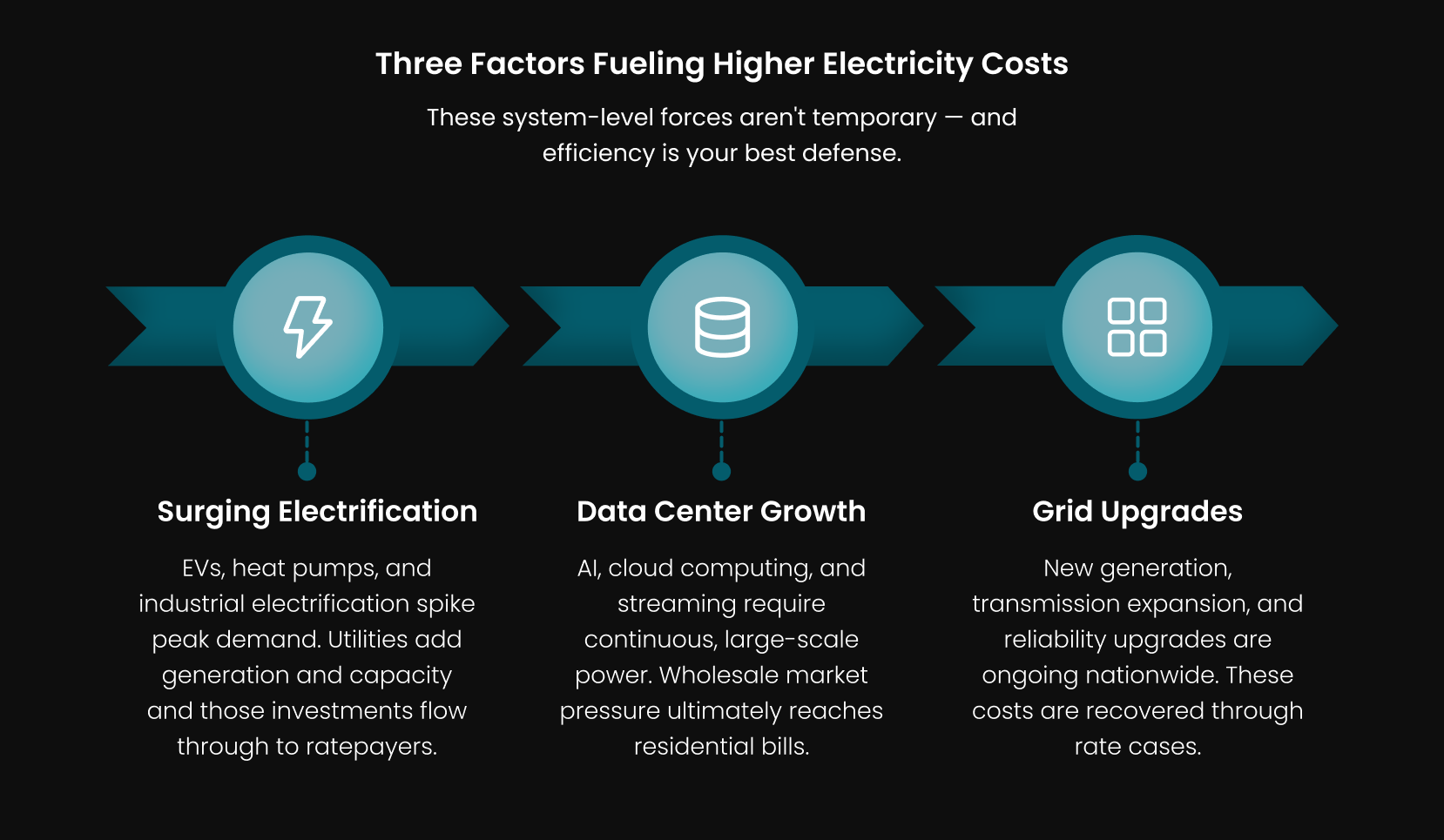
Electricity prices are rising because of structural pressures that extend well beyond household usage. These aren’t short-term spikes. They represent long-term cost shifts that make reducing energy demand financially strategic.
Homeowners cannot control national demand trends. They can control how much energy their home consumes.
Energy Costs by State: Why Location Still Matters
Residential Electricity Rates
Rising Costs, State by State
Cents per kWh, 2015–2035. Dashed lines indicate projected values from 2026 onward.
Solid lines reflect historical and current data through early 2026. Dashed lines represent projections based on recent state-level growth rates. Sources: EIA Electric Power Monthly; BLS Average Price of Electricity series. Projections are illustrative and subject to change based on grid conditions, policy, and fuel prices.
National trends pressures establish the direction of travel. Regional conditions determine how sharply households feel the increase. States long associated with low-cost electricity, including Kentucky, Tennessee, and North Carolina, are experiencing upward pressure from population growth, infrastructure transition, and longer cooling seasons.
Households currently paying $2,200 to $2,800 annually in Kentucky could see that rise to $3,100 or more by 2035. Tennessee and North Carolina follow a similar trajectory, with some projections placing annual bills between $3,000 and $3,700.
Texas and Florida may face steeper exposure, with certain households potentially approaching $4,000 annually as grid volatility and year-round cooling demand intensify.
Exact figures will vary based on weather, fuel prices, and regulatory decisions. The long-term direction, however, remains consistent.
Within the same utility territory, two homes of similar size can produce dramatically different bills. The difference is construction quality.
Why Square Footage No Longer Predicts the Cost of Electricity
Home size alone does not determine electricity costs.
Insulation levels, airtightness, and overall envelope performance drive energy demand more reliably than floor area. A 1,000-square-foot home built to minimum code can cost more to operate than a 2,000-square-foot home built with a high-performance envelope.
Older per-square-foot budgeting rules understate today's utility exposure.
A code-built home offers a more realistic baseline. A high-performance envelope moves that baseline significantly lower.
The One Factor Homeowners Can Influence: Energy Efficiency
Mortgage payments, property taxes, and insurance costs offer limited flexibility. Electricity consumption does not.
Design and construction choices determine how exposed a household will be to rising rates over the life of the home.

High-performance construction methods, including structural insulated panel (SIP) systems, commonly reduce energy use 40 to 60% compared to standard code-built homes.
Lower consumption directly reduces exposure to compounding rate increases.
A well-insulated, tightly sealed building envelope reduces heat loss and prevents unnecessary energy use regardless of what utilities charge.
Efficient systems like heat pumps perform best when paired with a high-performance shell. Without that foundation, equipment upgrades produce diminishing returns.
Efficiency savings accumulate year after year. The reduction becomes a permanent buffer against rising rates.
SIP Homes and Energy Savings in a Higher-Cost Electricity Future
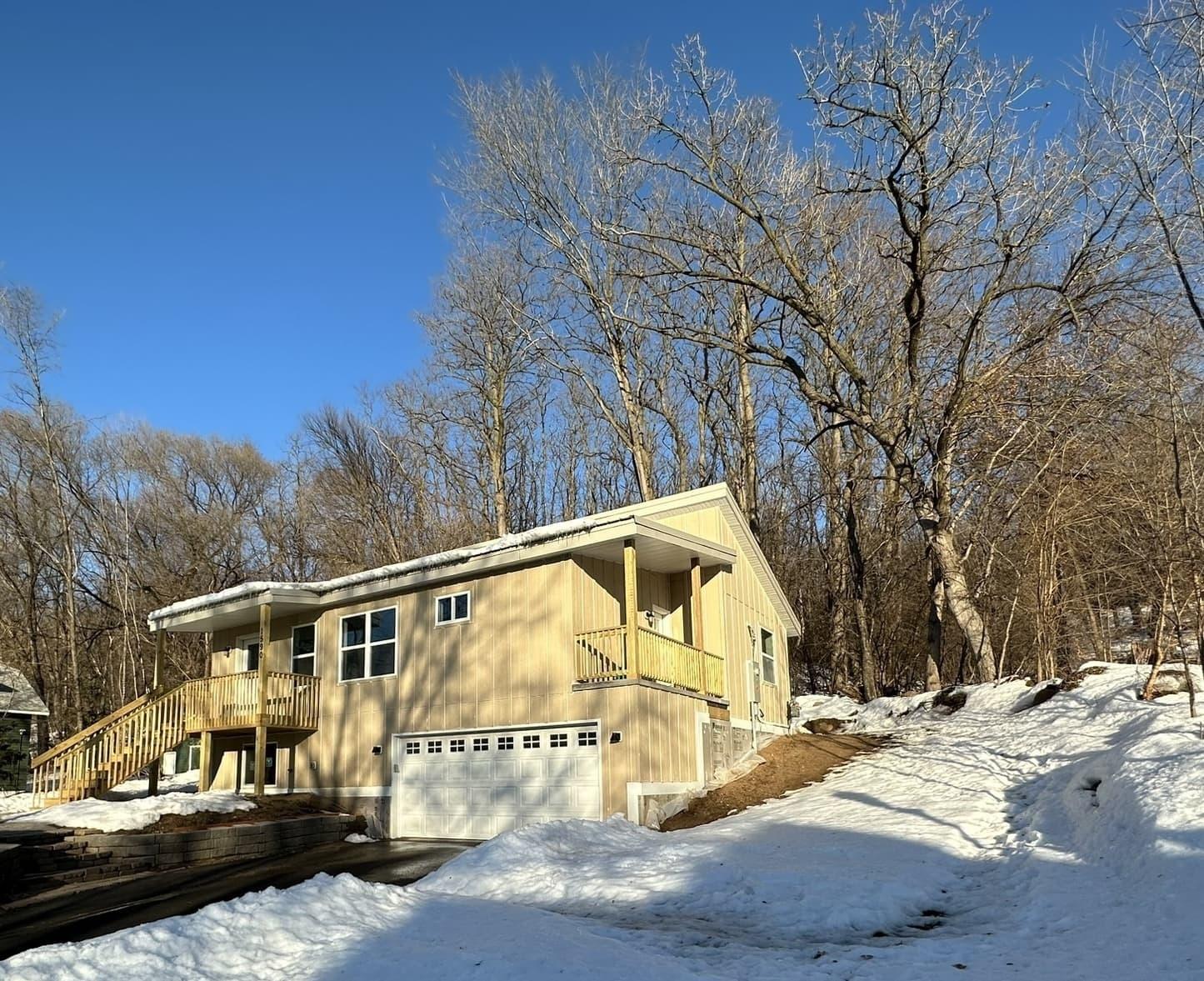
Structural insulated panels create tightly sealed wall and roof assemblies that limit thermal bridging and uncontrolled air leakage.
Homes built with SIP systems typically operate 40 to 60% below the energy consumption of comparable code-built homes.
Lower monthly usage today means lower exposure as rates rise eventually.
Factory-built SIP kits offered by companies such as Mighty Small Homes are designed for predictable long-term operating performance.
Prospective buyers can request a quote or schedule a consultation to evaluate projected savings for their location.
As electricity costs trend upward nationwide, consumption efficiency becomes the primary line of defense.
How to Build Energy-Efficient Homes for the Next 20 Years
Efficiency decisions made during design carry long-term financial consequences.
Improving envelope performance after construction is expensive and disruptive. Building for high performance from the start locks in lower energy demand for decades.
Homes built today should account for rate volatility, not just current pricing. A high-performance envelope reduces usage permanently. Utility rates continue to fluctuate and trend upward.
Electricity exposure is not fixed. It’s shaped by design.
FAQs
Long-term structural demand and infrastructure investment make sustained downward pressure on rates unlikely.
Not reliably. Envelope performance and insulation quality are better predictors of monthly bills.
No. Delays increase lifetime exposure as rates continue to rise.
SIP homes commonly reduce energy use 40 to 60% compared to typical code-built homes.
Only when paired with a high-performance building envelope that limits energy loss.